Make an apology that names the behavior and changes the next step
A useful apology acknowledges what you did and its effect without making the other person manage your discomfort. It also identifies an appropriate repair and a realistic change. The person receiving it remains free to need time, reject contact or decide that the relationship should not continue.
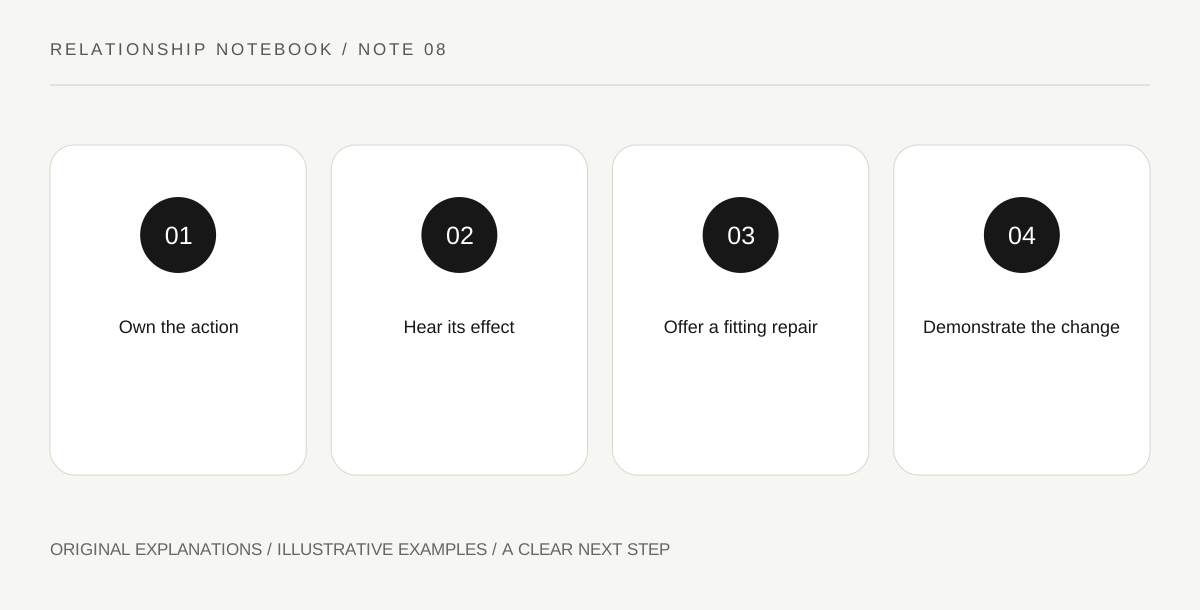
Original explanatory diagram. Read the full method and limitations below.
Name your action directly
I shared your private news without asking identifies the behavior. I’m sorry you felt upset shifts attention toward the other person’s reaction and leaves the action unclear. Describe your responsibility without inserting a long account of why the other person partly caused it.
Context may matter later, but an apology loses clarity when every acknowledgment is immediately followed by but. Separate explanation from ownership. You can say that you misunderstood a preference while still acknowledging that you should have checked before sharing something personal. Responsibility does not require a theatrical judgment that you are entirely worthless.
Acknowledge the effect without claiming to know it all
State the impact you understand and invite correction: I can see that this took away your choice about who knew. Do not tell the person exactly how they must feel. They may identify a different consequence, such as a workplace problem or loss of trust.
Listen without demanding immediate reassurance that you are still a good partner. If you become ashamed, manage that feeling through your own support rather than making the injured person comfort you before their concern is addressed. The apology should leave room for their experience.
Offer a repair that fits the harm
A repair should relate to the action. If you shared incorrect information, ask whether a correction would help and with whom. Do not spread the private story further in the name of apologizing. Some effects cannot be undone, so avoid promising complete restoration.
Ask what would be useful while retaining responsibility for proposing sensible options yourself. Making the other person design every step can become another burden. They may not want a repair you can offer, and they do not owe you renewed contact merely because you are ready to act.
Choose an observable change
I will ask before sharing personal updates is more specific than I will never hurt you again. Identify the situation in which you will act differently and follow through without requiring constant praise. An apology’s credibility develops through behavior over time, not the emotional intensity of the moment.
If the same harm keeps recurring, another eloquent apology is insufficient evidence of change. Consider what accountability or individual help is needed, and respect the other person’s decisions. Forgiveness, trust and continuing the relationship are separate choices; none is a payment due for saying sorry.
Illustrative privacy repair
Chris tells a friend about Pat’s job search without permission. Chris says, I shared your news without asking, and that removed your choice. I’m sorry. Would you like me to ask the friend not to discuss it? I will check with you before sharing personal updates. Pat declines further action for now and asks for space. Chris respects that.
Practical checks
Optional checkboxes save only in this browser.
Questions that come up
Should an apology guarantee forgiveness?
No. The recipient controls whether and when to forgive, trust or continue contact. An apology is an act of accountability, not a transaction that obliges a particular emotional response.
Can I explain my intention?
You can if it is relevant and the person wants to discuss it, but intention does not cancel impact. Begin with ownership and avoid using the explanation to require them to minimize what happened.
References and scope
These sources support the factual background. Examples and exercises are original illustrative teaching material. References do not imply endorsement.
- loveisrespect: Respect in a healthy relationship — Equality, autonomy, honest communication, supportive behavior and respecting opinions.
- Gottman Institute: The Four Horsemen and antidotes — Specific complaints, respectful openings, taking responsibility and pausing an overwhelmed conflict discussion.
- Gottman Institute: Mindful apology — Owning behavior, repair and concrete improvement after an ordinary relationship hurt.