Take a conflict break with a clear plan to return
A pause can help when a conversation becomes too heated to follow. It works differently from disappearing indefinitely or using silence to punish. Name the need for a break, respect space and make a realistic plan to revisit the issue when both people can participate.
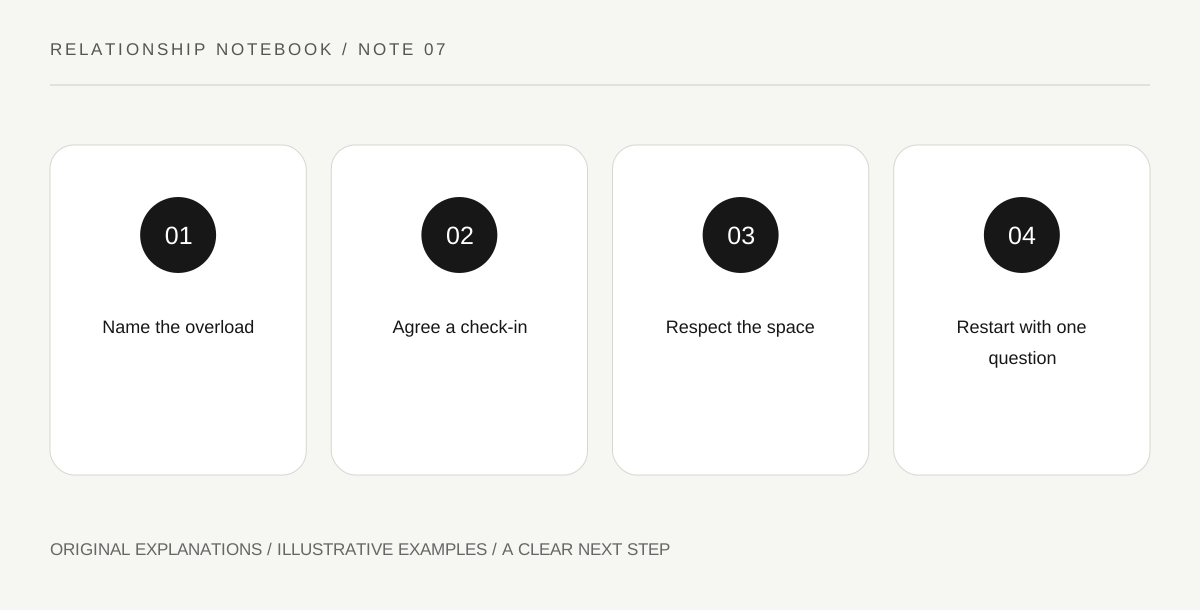
Original explanatory diagram. Read the full method and limitations below.
Notice the conversation is no longer productive
Signs may include repeating the same accusation, losing track of the question, interrupting constantly or feeling unable to hear an answer. You do not need to win a debate about whose emotional response is valid before asking for a pause. Name your own difficulty rather than diagnose the partner.
Try saying, I’m having trouble listening and I need a break. This identifies the purpose without claiming the other person is irrational. A pause is a tool for making participation possible again, not a declaration that the issue is unimportant or that only one person gets to decide when discussion happens.
Give the break a shared reference point
Where appropriate, propose a return time or a check-in time if you cannot yet commit to restarting. The interval should be realistic for the people and circumstances. An illustrative plan might be to check in after dinner, rather than promise that a universal number of minutes will reset everyone.
Confirm what the check-in means: deciding whether to resume, arranging another time or handling an urgent practical detail. A break does not suspend responsibilities such as a necessary childcare handoff. Discuss practical needs briefly without using them as a reason to continue the entire argument.
Use the space to settle rather than rehearse attack
Choose an ordinary activity that helps you become more able to listen, such as a quiet walk, reading or sitting separately. Avoid repeatedly composing a stronger prosecution of the partner. The aim is to return with a clearer account of the issue and your own responsibility.
Respect the other person’s space during the break. Following them from room to room or sending a stream of argumentative messages defeats its purpose. If someone feels unsafe, preserving safety takes priority over a promise to resume; a relationship exercise must never require remaining available to intimidation.
Restart with a smaller question
At the agreed check-in, ask whether both can return. Summarize the issue in one sentence and choose the next manageable question. You may need to acknowledge a hurtful remark before discussing logistics. The break itself does not resolve what happened.
If return plans repeatedly disappear, discuss that pattern at a calm time. A pause that reliably prevents any difficult subject from being addressed is not functioning as intended. You can seek support or reconsider the interaction without deciding that all breaks are avoidance or that every issue must be settled immediately.
Illustrative pause agreement
During a disagreement about weekend plans, both partners begin interrupting. One asks for a break and suggests checking in after a meal. They agree not to continue by text. At the check-in, they choose one question: whether Saturday afternoon is already committed. They leave the broader holiday discussion for another day instead of reopening every related grievance at once.
Practical checks
Optional checkboxes save only in this browser.
Questions that come up
Is every request for space stonewalling?
No. A clearly communicated pause with an appropriate return plan can support discussion. Look at the pattern and purpose, including whether difficult issues are eventually addressed and whether either person is using silence to punish.
Must I return at the promised time if I feel unsafe?
No. Safety takes priority. You can seek individualized support and change the plan. A communication agreement does not create an obligation to participate in a threatening or intimidating interaction.
References and scope
These sources support the factual background. Examples and exercises are original illustrative teaching material. References do not imply endorsement.
- NHS: Maintaining healthy relationships and mental wellbeing — Listening, check-ins, time apart, boundaries, stress, conflict and permission to leave an unhealthy relationship.
- Gottman Institute: The Four Horsemen and antidotes — Specific complaints, respectful openings, taking responsibility and pausing an overwhelmed conflict discussion.
- Gottman Institute: Six conflict-management skills — Conflict dialogue, repair, influence and recognizing that recurring differences may need management.