Open a difficult conversation with one specific concern
A disagreement is easier to understand when its opening identifies the issue instead of attacking a person’s character. Choose a suitable moment, describe one concrete concern and explain what change you want to discuss. A respectful opening helps clarity, but it cannot guarantee the other person will respond well.
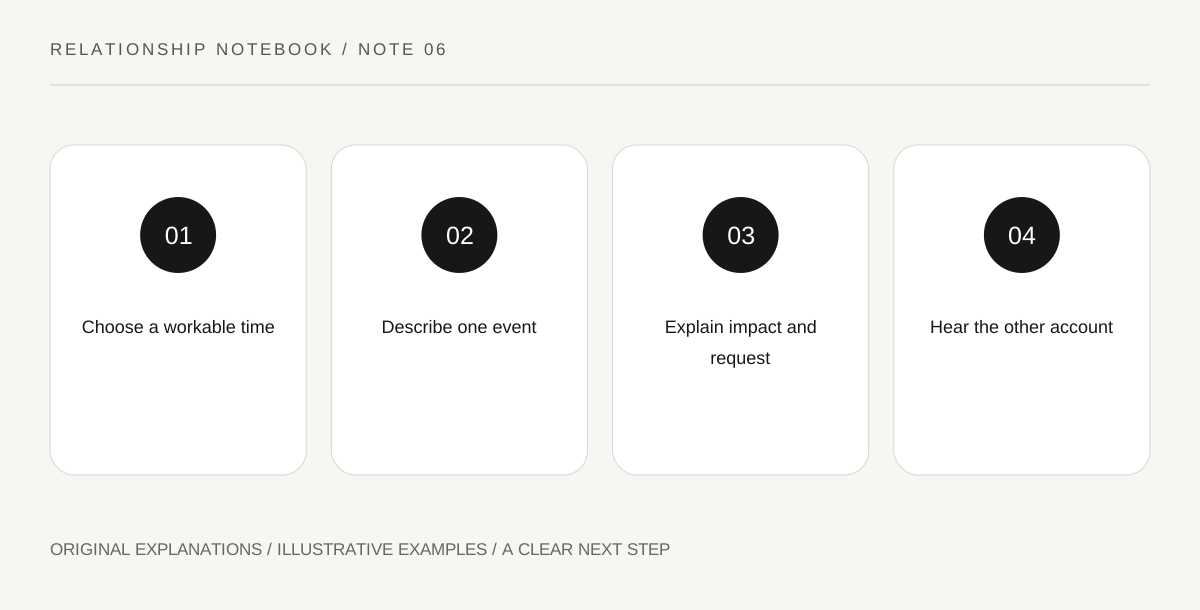
Original explanatory diagram. Read the full method and limitations below.
Choose a time that allows attention
Ask whether now is a workable time for a short conversation. Starting while someone is leaving for work or falling asleep can turn a solvable issue into a battle about timing. If now is unsuitable, agree on another opportunity rather than let later remain indefinitely undefined.
Preparation should not become an ambush with a long prosecution file. Choose the issue that matters today and the information needed to explain it. If you are afraid of retaliation, the problem is not simply finding an ideal time; seek support appropriate to your situation rather than rehearsing a better confrontation.
Describe a behavior without a global label
When the plan changed after I had already left home identifies an event. You are inconsiderate turns it into a character judgment. The first gives the partner something they can recognize and discuss. Avoid always and never unless they are literally accurate and necessary, because they often shift attention to exceptions.
This does not mean you must hide a repeated pattern. You can say this happened on several recent occasions and describe the effect. The distinction is between observable behavior and a totalizing claim about who the partner is. Specificity makes the requested change easier to evaluate.
State the impact and desired discussion
Explain the effect in your own terms: I felt stranded and lost time waiting. Then name the practical issue: I’d like us to agree how to update each other when plans change. A complaint without a desired discussion may leave the partner defending the past rather than helping shape the next action.
A sentence beginning I feel can still accuse. I feel that you enjoy upsetting me asserts an intention. Use an actual feeling and a specific need where possible. You can be direct about hurt without claiming certainty about a motive you have not established.
Leave room for the other account
Ask what happened from the partner’s perspective and listen for missing information. Understanding their account does not erase the impact on you. Both can be true: a change was unavoidable, and the communication around it was inadequate. The practical question becomes how to handle the next unavoidable change.
If the discussion expands into unrelated grievances, name that shift and return to the current issue or schedule another conversation. One opening cannot solve every accumulated concern. A useful outcome may be a small agreement, a clearer disagreement or recognition that more support is needed.
Illustrative changed-plan opening
Ari says, Is this a good time to talk about Saturday’s change? When I learned the venue had changed after I arrived, I felt left out and frustrated. Could we agree to confirm changes before either of us leaves? Devon explains the late notice they received. They discuss an update method instead of debating whether either person is fundamentally thoughtful.
Practical checks
Optional checkboxes save only in this browser.
Questions that come up
Does a gentle opening mean minimizing a serious issue?
No. You can state a serious concern plainly and firmly. The aim is to make the behavior and needed change clear, not soften the meaning until your own needs disappear.
What if respectful wording still leads to shouting?
You cannot control the response with a perfect script. Consider whether to pause, end the conversation or seek support. If fear or intimidation is present, ordinary joint communication exercises may not be appropriate.
References and scope
These sources support the factual background. Examples and exercises are original illustrative teaching material. References do not imply endorsement.
- NHS: Maintaining healthy relationships and mental wellbeing — Listening, check-ins, time apart, boundaries, stress, conflict and permission to leave an unhealthy relationship.
- loveisrespect: How can I communicate better? — Appropriate timing, attention, honest discussion and caution when communication advice could create danger.
- Gottman Institute: The Four Horsemen and antidotes — Specific complaints, respectful openings, taking responsibility and pausing an overwhelmed conflict discussion.