Discuss cultural differences through the individual in front of you
Partners may bring different family traditions, languages or expectations to a relationship. Curiosity helps when it asks about a person’s actual experience rather than assigning them a group script. Explore the meaning of a practice, decide what each person wants and keep respect separate from compulsory agreement.
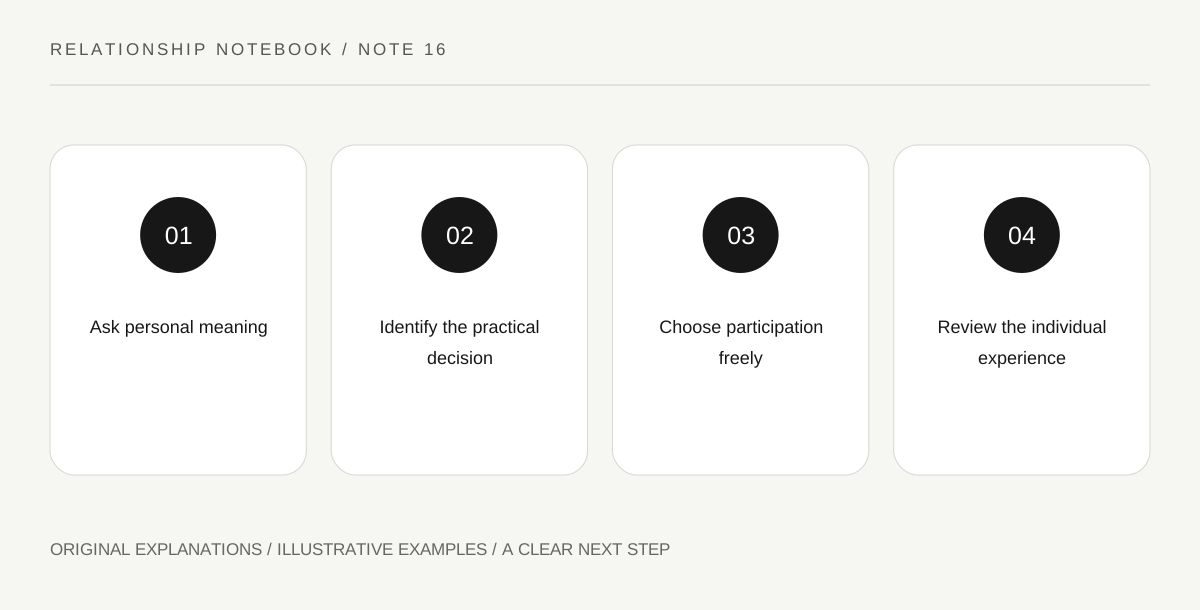
Original explanatory diagram. Read the full method and limitations below.
Ask about personal meaning
Instead of saying People from your culture always do this, ask What does this tradition mean to you? A person may value, adapt or reject a practice associated with their background. Nationality, religion and family history do not determine an individual’s preferences in the same way.
Share your own context with the same care. In my family we usually… describes an experience; This is the proper way suggests a universal rule. Naming your background as one perspective creates room for both adults to explain how they want to live now.
Separate tradition from the decision at hand
A disagreement about attending a family event may involve travel, cost, public visibility, language comfort or the event’s meaning. Identify the practical decision rather than assume culture explains everything. Several concerns can be present at once, and each may need a different response.
List what is optional, what others expect and what you personally want. The partner should not have to guess which expectation belongs to whom. You can care about a family relationship while choosing a different arrangement; describing that tension honestly is more useful than presenting outside pressure as an unchangeable law.
Agree on participation without demanding assimilation
A person can attend part of an event, learn a greeting or ask questions without promising to adopt every associated belief. Discuss what participation would mean and what boundaries remain. Consent to one gathering does not establish consent to every future ritual or public announcement.
Language differences also affect participation. Ask whether interpretation, translated information or a shorter visit would help. Do not make the partner perform unfamiliar language as entertainment or treat a mistake as disrespect. A supportive explanation can make participation more informed and less intimidating.
Keep autonomy and safety visible
Cultural context can shape choices and the kinds of support available, but it does not justify coercion or abuse. If a proposed compromise requires fear, unwanted intimacy or loss of basic independence, treat that concern directly instead of hiding it under respect for tradition.
After an event or discussion, ask what each person experienced and what they want next time. Avoid appointing either partner as the official representative of an entire community. The useful outcome is a shared understanding between these adults, with room for complexity and changing preferences.
Illustrative family celebration
One partner wants to include the other in a family festival meal. The other is interested but worried about language and a public introduction as a future spouse. They discuss those concerns separately. They agree on a short visit with translation help and no unagreed relationship announcement. Participation becomes a chosen experience rather than a test of cultural loyalty.
Practical checks
Optional checkboxes save only in this browser.
Questions that come up
Does respecting a tradition require taking part?
No. Respectful curiosity and voluntary participation are different things. You can learn about a practice while deciding it does not fit your beliefs, comfort or circumstances.
What if family expectations are very strong?
Discuss the actual constraints and what each adult can choose. Acknowledge the difficulty without treating pressure as automatic consent. If safety is involved, seek support suited to the person’s circumstances and community.
References and scope
These sources support the factual background. Examples and exercises are original illustrative teaching material. References do not imply endorsement.
- loveisrespect: What are my boundaries? — Personal, physical and digital boundaries; changes freely chosen; distinction between boundaries and control.
- loveisrespect: Respect in a healthy relationship — Equality, autonomy, honest communication, supportive behavior and respecting opinions.
- loveisrespect: Relationships and cultural context — Considering individual circumstances without excusing abuse through cultural assumptions.