Support a stressed partner without taking over their life
When someone you care about is under strain, the urge to fix everything can be strong. Useful support begins by asking what they want and what you can realistically offer. Keep the person’s choices intact, preserve your own limits and make room for support beyond the relationship.
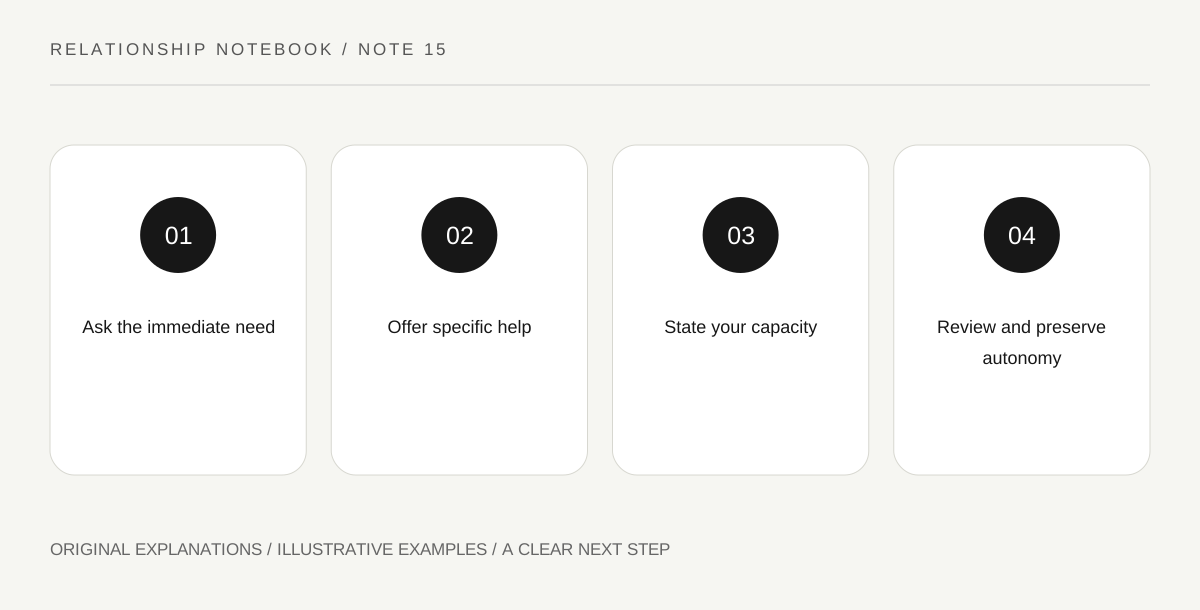
Original explanatory diagram. Read the full method and limitations below.
Ask about the immediate need
A stressed person may need a meal, quiet company, help with one task or someone to listen. Ask what would be useful today rather than take charge of their whole situation. A specific offer can be easier to answer than Let me know if you need anything.
Offer choices without creating another demanding assignment. Would it help if I brought dinner, or would you prefer space tonight? gives two options and leaves room for another answer. Do not assume that practical help is welcome merely because you can see a task that has not been done.
Keep help proportionate and consensual
Taking over messages, contacting a workplace or making appointments without agreement can remove the person’s control. Ask before acting on their behalf, particularly when personal information is involved. Support should make their choices easier, not establish you as the manager of their decisions.
If they decline an offer, respect it unless an immediate situation requires appropriate emergency action. Ordinary stress does not erase adult autonomy. You can share a concern and offer resources without demanding that they use your preferred solution as proof that they appreciate your care.
State your capacity honestly
You can care and still have work, rest and emotional limits. Say what you can offer: I can listen for a while this evening, and I can help with the groceries tomorrow. A specific limit is more useful than offering unlimited availability and later withdrawing with resentment.
Notice if you are becoming the sole source of support. Ask whether there are friends, family members or appropriate professionals the person would like to involve. Do not share their private information without agreement simply because you want help organizing support. Privacy and wider connection can be discussed together.
Check what the help actually changed
After helping, ask whether the action was useful and what they would prefer next time. Avoid requiring gratitude in a particular form. A person under strain may respond quietly, but you can still discuss your own needs if a pattern leaves you feeling depleted or treated badly.
Stress can explain a difficult moment without excusing insults, coercion or threats. Maintain your boundaries and seek your own support if needed. This educational approach does not diagnose the cause of distress or promise recovery; persistent or severe difficulties may benefit from qualified individual help.
Illustrative practical support
Dee is overwhelmed by a work deadline. Rowan asks whether dinner or quiet time would help. Dee chooses dinner and asks that Rowan not contact colleagues. Rowan agrees and explains that they also need an early night. The next day they check whether the meal helped. Support remained specific, voluntary and compatible with Rowan’s own rest.
Practical checks
Optional checkboxes save only in this browser.
Questions that come up
Is setting a limit selfish when a partner is stressed?
No. Honest limits help make support sustainable. State what you can offer and consider other support with the person’s agreement, rather than promising availability you cannot maintain.
Should I tolerate hurtful behavior because they are stressed?
Stress does not remove your right to respectful treatment. You can acknowledge the strain while setting limits on behavior. Threats or fear need an appropriate response beyond an ordinary support conversation.
References and scope
These sources support the factual background. Examples and exercises are original illustrative teaching material. References do not imply endorsement.
- NHS: Maintaining healthy relationships and mental wellbeing — Listening, check-ins, time apart, boundaries, stress, conflict and permission to leave an unhealthy relationship.
- loveisrespect: Respect in a healthy relationship — Equality, autonomy, honest communication, supportive behavior and respecting opinions.
- loveisrespect: Support systems at home — Outside support, practical and emotional help, privacy preferences and communicating support needs.
- loveisrespect: Self-care — Individual interests, time for oneself and choosing personally useful support.