Talk about the cost of dates before money becomes a surprise
Different incomes and spending preferences can make a pleasant plan uncomfortable when payment is left to assumption. Discuss the type of outing and how costs will be handled before committing. The aim is a freely workable plan, not a judgment about generosity, gender or someone’s financial worth.
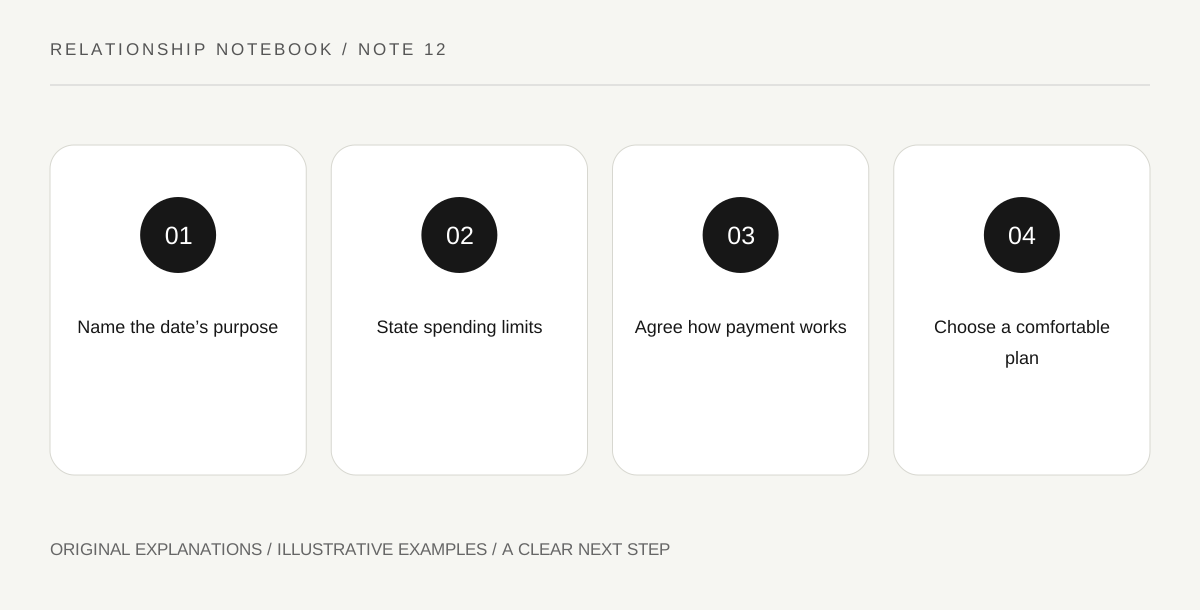
Original explanatory diagram. Read the full method and limitations below.
Separate the activity from its price
Ask what you want from the date: conversation, novelty, celebration or time outdoors. The same purpose may be served by several activities with different costs. This creates alternatives without requiring the lower-spending person to disclose every detail of their finances.
A simple I’d enjoy seeing you, but that restaurant is beyond what I want to spend is enough to establish a limit. Avoid treating reluctance to spend as proof of limited affection. Equally, a preference for an expensive activity does not automatically mean the person is careless; the plan still needs mutual agreement.
Clarify who pays and what an offer means
People bring different expectations about splitting, alternating and treating. Ask what arrangement each person prefers rather than relying on a gender rule or the fact that one person suggested the venue. Discuss the plan before the bill arrives when possible.
If you offer to pay, make the offer clear and allow a comfortable refusal. Paying does not create entitlement to intimacy, another date or control of the evening. A gift should not become an unannounced debt. Each person remains free to decide what contact they want afterward.
If a plan changes, discuss any added cost before treating it as agreed. The original invitation may not cover an extra ticket, journey or meal.
Choose a plan within both limits
One person may be comfortable contributing less, or both may prefer a lower-cost activity. There is no universal formula that makes every arrangement fair. Consider voluntary choice, frequency and whether either person feels pressure or resentment rather than applying a neat split without context.
Use an illustrative comparison with a café visit, a public walk and a ticketed event. Identify the expected cost categories, not invented current prices. Ask which plan lets both enjoy the outing without financial strain or discomfort. Choosing another activity is a successful result, not a failed romantic gesture.
Revisit recurring spending patterns
If dates repeatedly create tension, discuss the pattern outside the moment of payment. Explore what spending represents to each person: security, celebration, independence or hospitality. Understanding the meaning helps, but does not require adopting the same spending level.
This is communication education, not advice about debt, joint accounts or legal obligations. Significant shared financial commitments deserve appropriate independent information. For ordinary dates, finish with a clear agreement about the chosen outing and payment so neither person has to interpret a surprise afterward.
Illustrative outing choice
Mina suggests a ticketed dinner event. Jo says the total is beyond their current date budget and proposes a café visit. Mina offers to pay, but Jo would prefer a simpler outing this time. They choose the café and agree to buy their own orders. The conversation resolves the plan without requiring Jo to justify private financial details.
Practical checks
Optional checkboxes save only in this browser.
Questions that come up
Is splitting equally always the fairest option?
Not automatically. People’s means and preferences differ. A fair arrangement is freely understood and acceptable to those involved; no single percentage replaces that conversation.
Does accepting a paid date create a romantic obligation?
No. Paying for an outing does not purchase affection, intimacy or future contact. Discuss costs clearly and keep consent and relationship choices separate from gifts or spending.
References and scope
These sources support the factual background. Examples and exercises are original illustrative teaching material. References do not imply endorsement.
- RAINN: Consent 101 — Clear, voluntary, ongoing consent; respecting withdrawal and stopping when participation is uncertain.
- loveisrespect: What are my boundaries? — Personal, physical and digital boundaries; changes freely chosen; distinction between boundaries and control.
- loveisrespect: Respect in a healthy relationship — Equality, autonomy, honest communication, supportive behavior and respecting opinions.
- Gottman Institute: Constructive conversations about money — Respectful money discussions and exploring meanings behind financial differences.