Communication3 min read
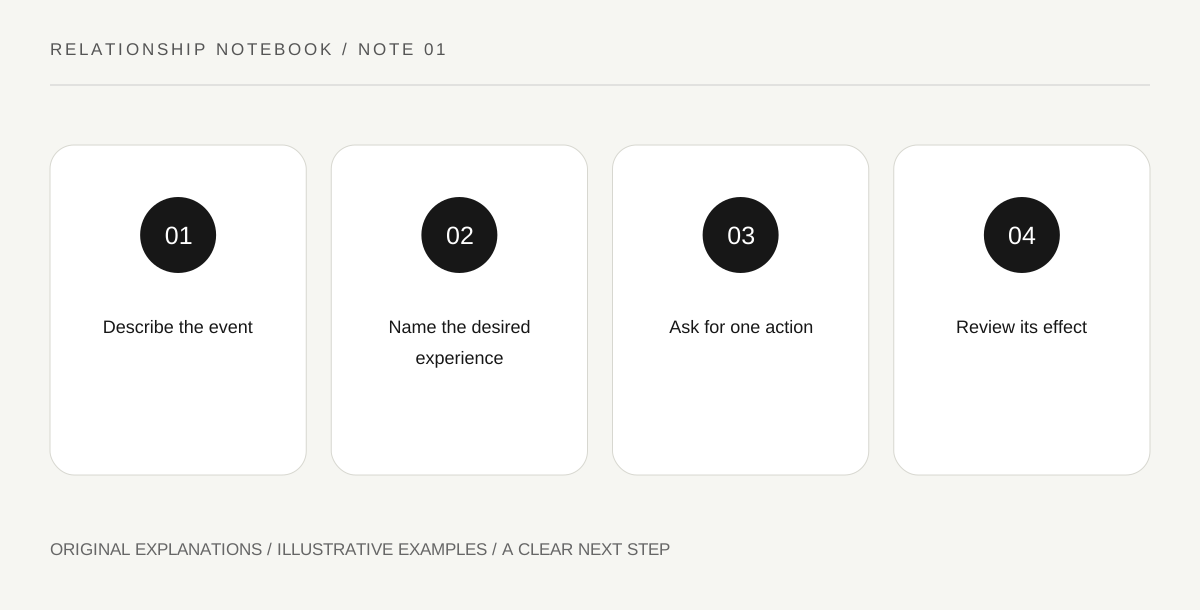
A partner cannot respond clearly to a need that remains hidden inside a complaint. Identify the experience you want, describe the situation specifically and ask for one possible action. The request should invite a genuine answer, including a different proposal, rather than test whether the other person can read your mind.
Read the guide ↗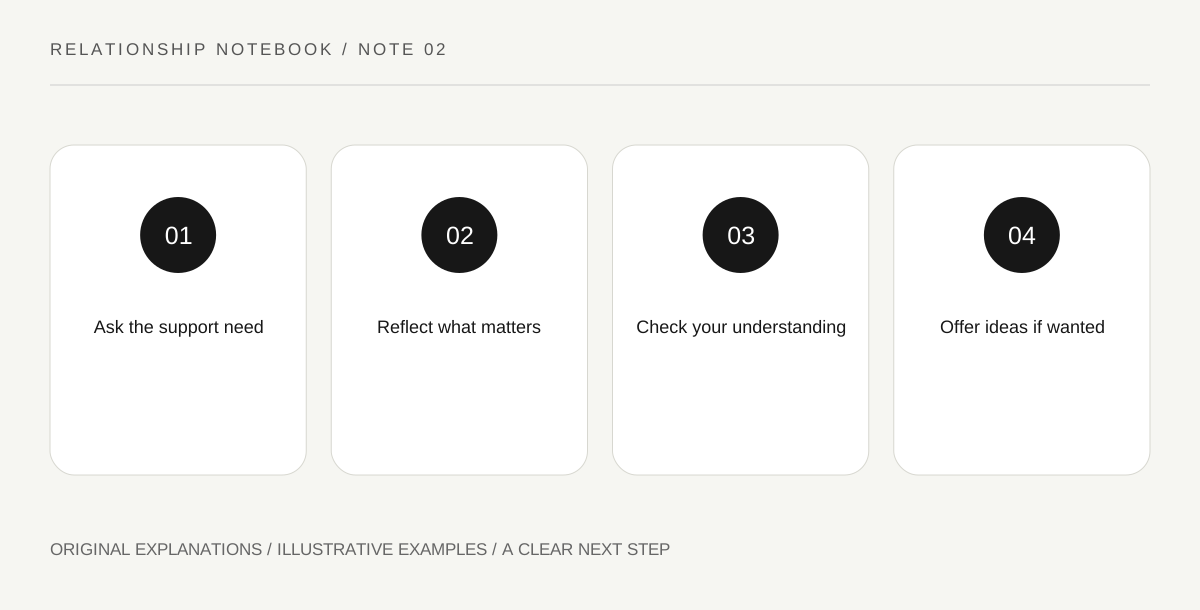
Communication3 min read
Advice can miss the point when someone first needs to feel understood. Listening does not require agreeing with every interpretation or solving the problem. Find out what kind of support is wanted, reflect the important part and check whether practical ideas would help before offering them.
Read the guide ↗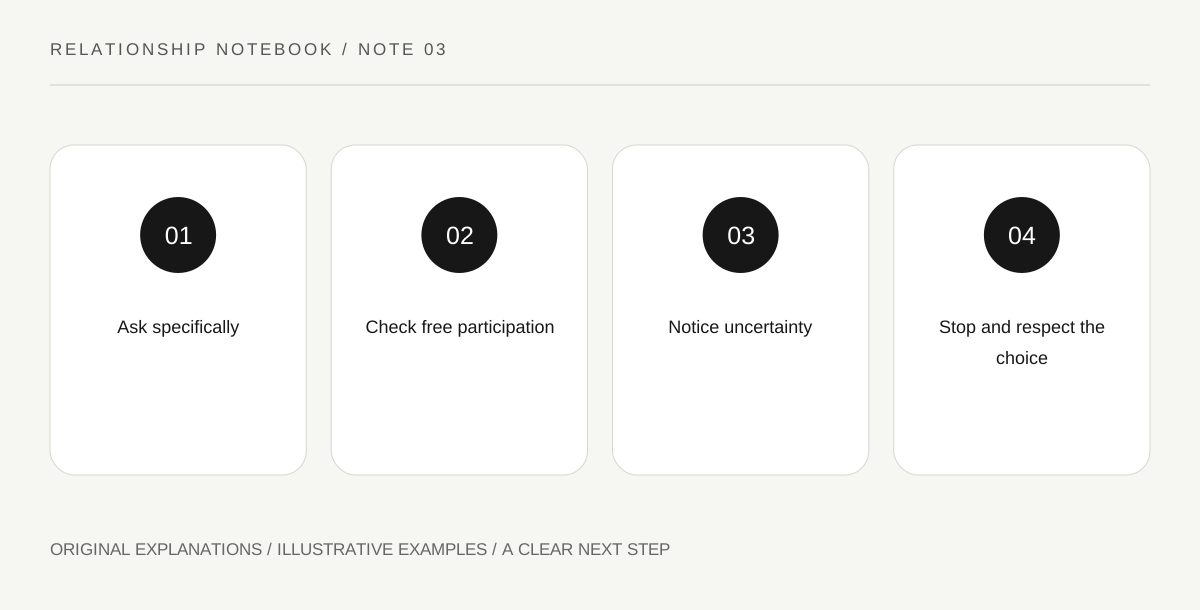
Consent and boundaries3 min read
Consent is an active, freely chosen agreement about the specific activity happening now. A relationship label, previous yes or affectionate mood does not replace it. Learn to ask clearly, notice uncertainty, stop when needed and respond to a changed mind without pressure or punishment.
Read the guide ↗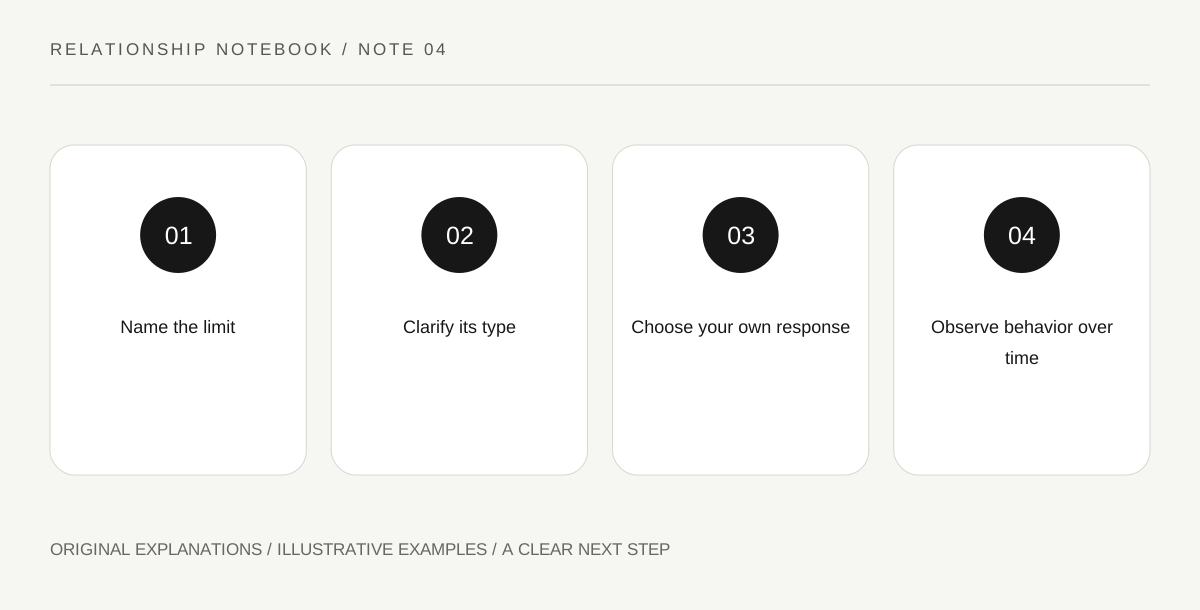
Consent and boundaries3 min read
A boundary describes what you are comfortable with and the choices you will make to protect that limit. It does not give you authority over another adult’s friendships or behavior. Clarify the difference between a preference, a request, a mutual agreement and a limit you will uphold yourself.
Read the guide ↗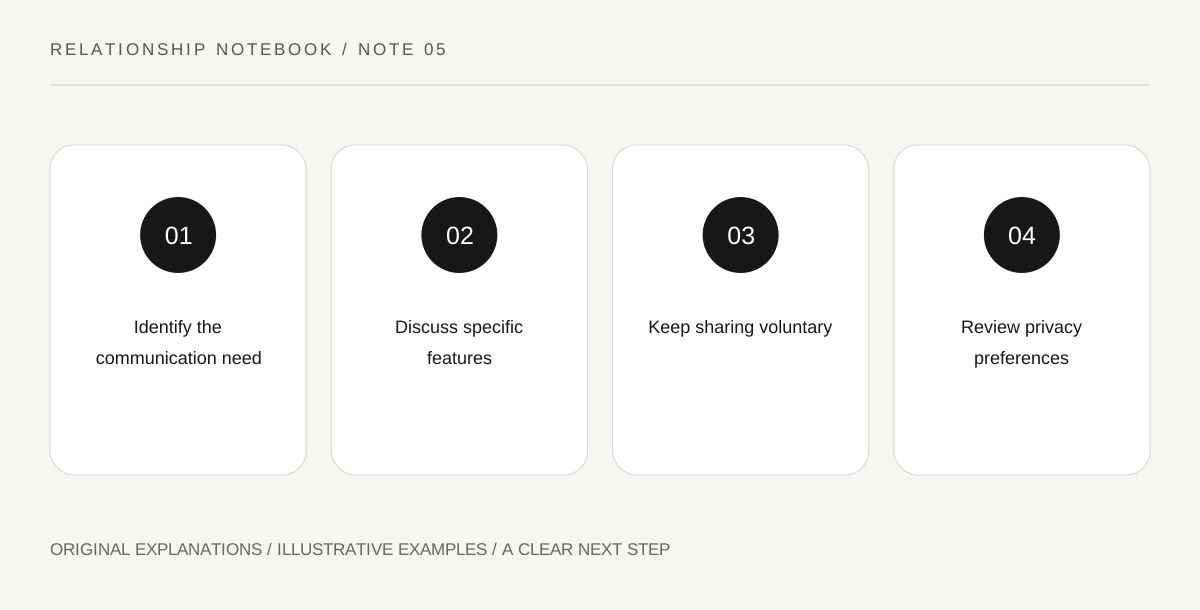
Consent and boundaries3 min read
Messaging, photos and location features can create closeness or pressure depending on how they are used. Discuss specific digital choices rather than assuming that a relationship requires unrestricted access. An agreement should preserve independent accounts, freely chosen sharing and the ability to revise a preference.
Read the guide ↗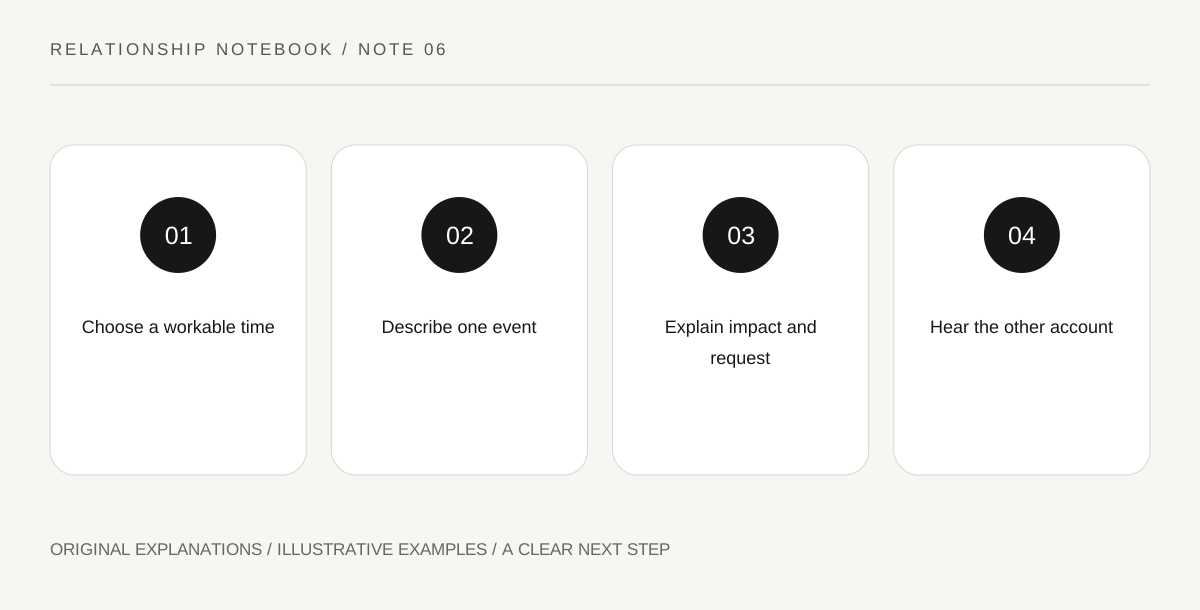
Conflict and repair3 min read
A disagreement is easier to understand when its opening identifies the issue instead of attacking a person’s character. Choose a suitable moment, describe one concrete concern and explain what change you want to discuss. A respectful opening helps clarity, but it cannot guarantee the other person will respond well.
Read the guide ↗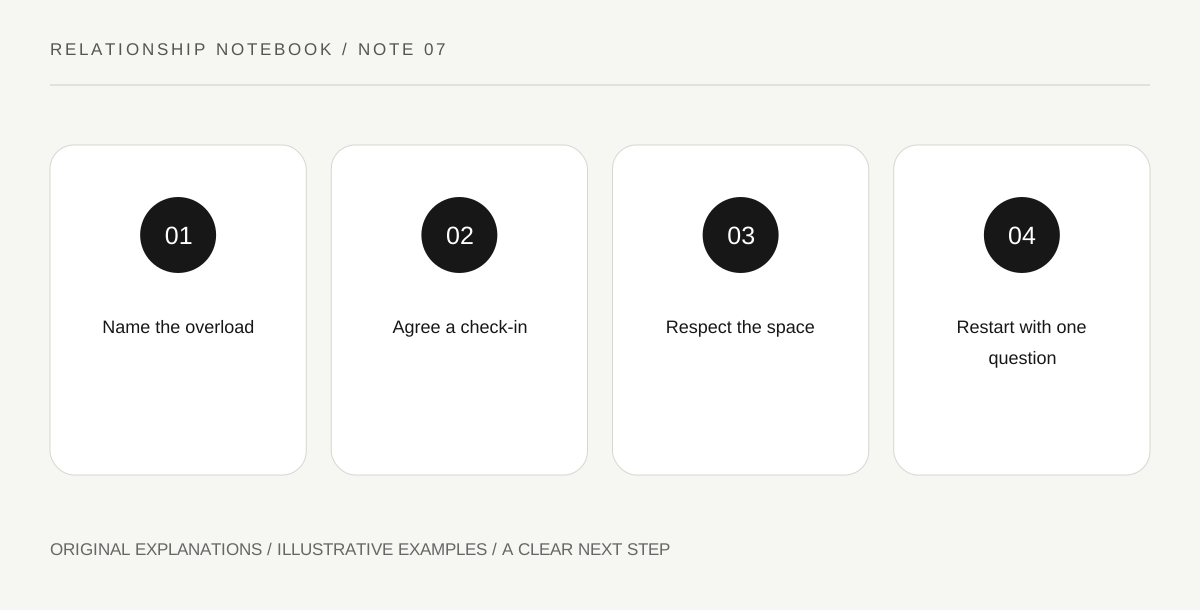
Conflict and repair3 min read
A pause can help when a conversation becomes too heated to follow. It works differently from disappearing indefinitely or using silence to punish. Name the need for a break, respect space and make a realistic plan to revisit the issue when both people can participate.
Read the guide ↗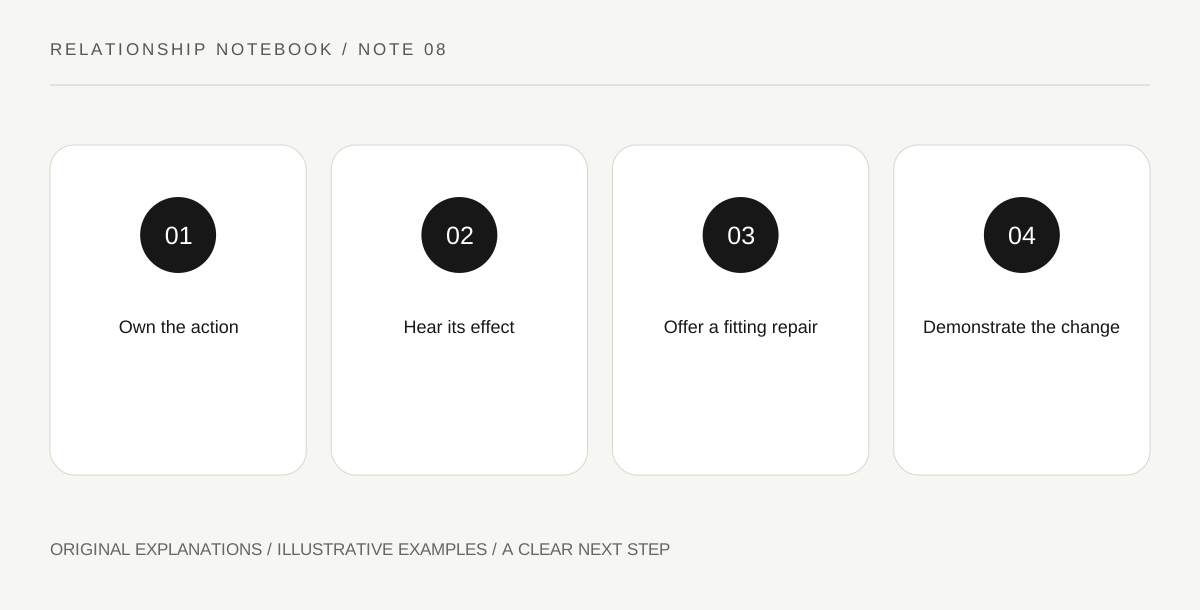
Conflict and repair3 min read
A useful apology acknowledges what you did and its effect without making the other person manage your discomfort. It also identifies an appropriate repair and a realistic change. The person receiving it remains free to need time, reject contact or decide that the relationship should not continue.
Read the guide ↗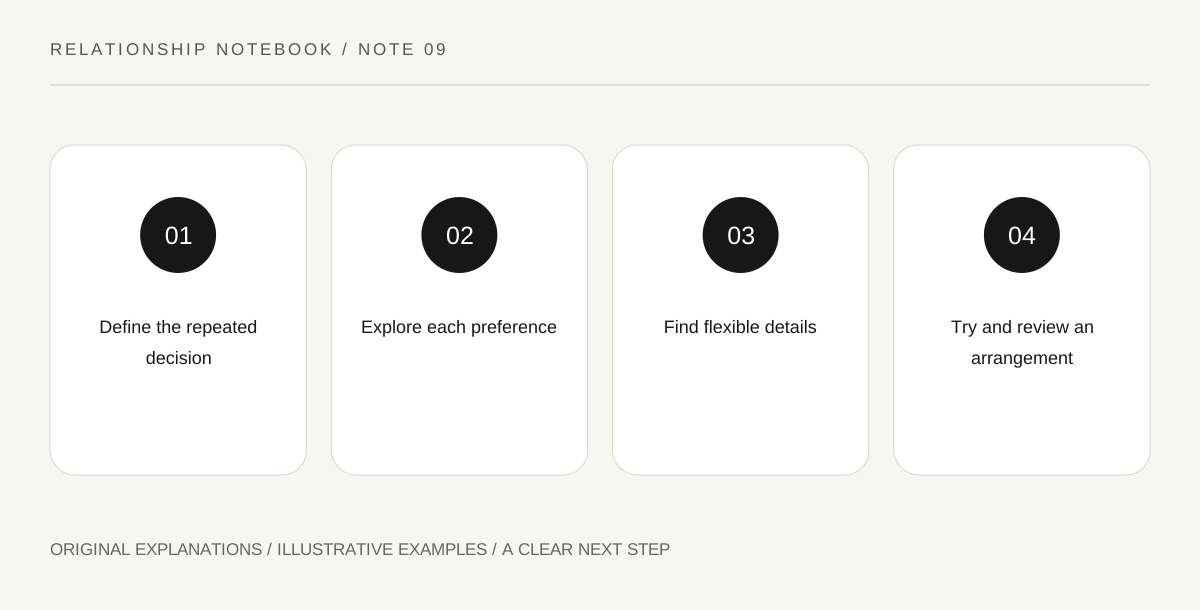
Conflict and repair3 min read
Some disagreements return because partners prefer different levels of sociability, planning or quiet. The aim may be a workable arrangement rather than proving that one preference is objectively superior. Identify the recurring situation, understand what each preference provides and test a plan with room for review.
Read the guide ↗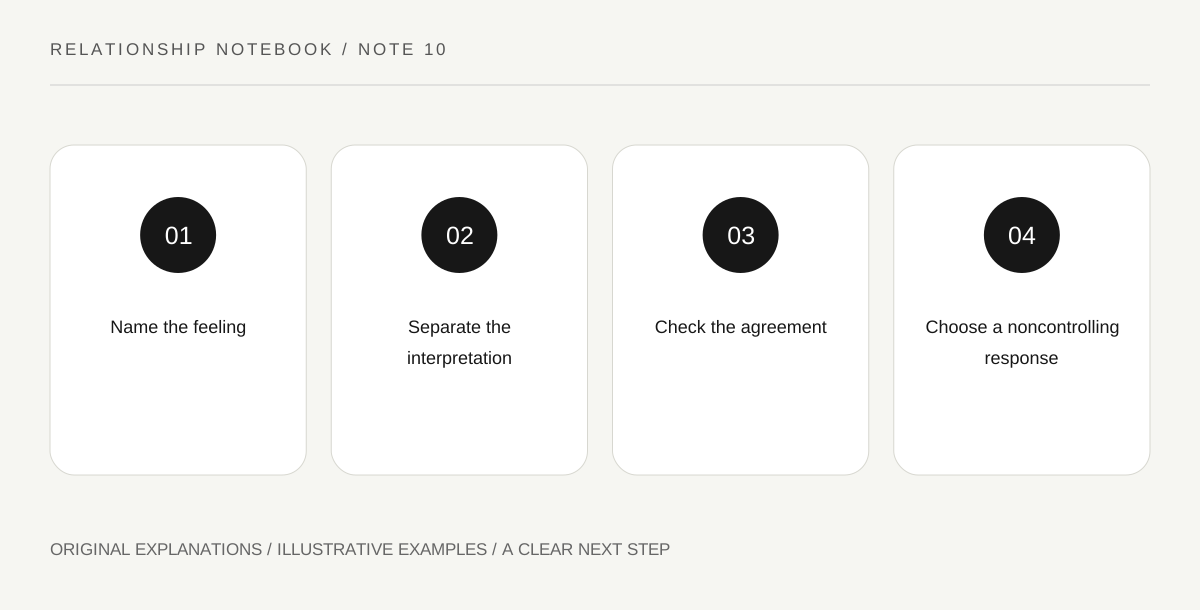
Consent and boundaries3 min read
Jealousy can be an uncomfortable feeling, but it does not authorize control over another adult. Separate the emotion, the story you are telling yourself and the behavior you choose. Discuss a specific concern while preserving independence, privacy and the other person’s freedom to maintain ordinary relationships.
Read the guide ↗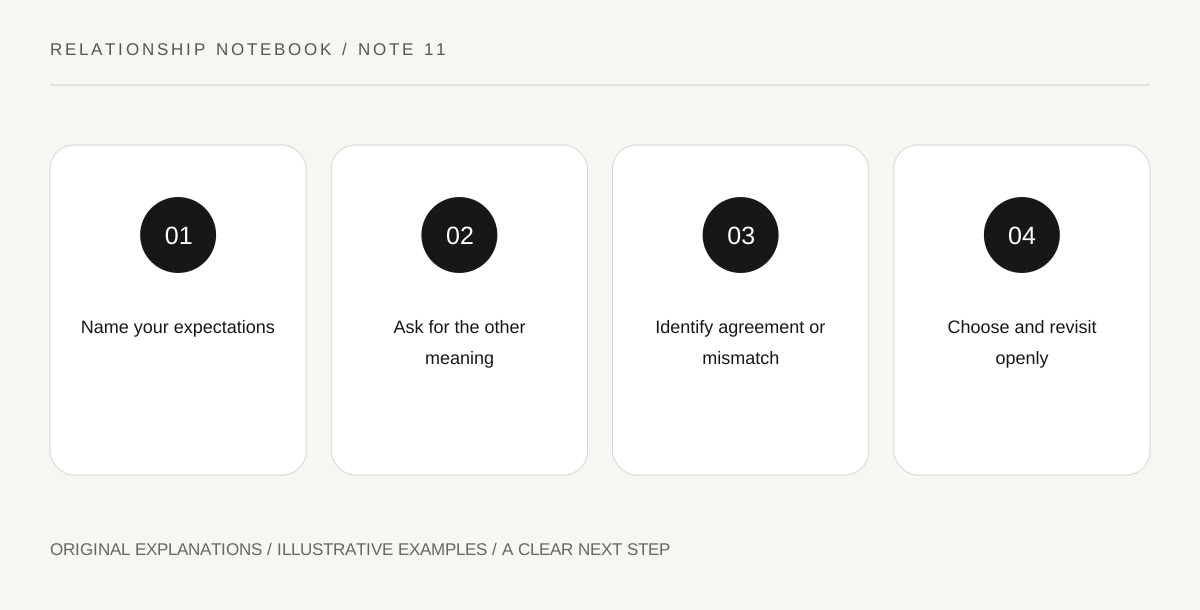
Communication3 min read
Words such as dating, exclusive or serious can carry different meanings for different adults. A useful conversation identifies the actual choices and commitments behind the label. State what you want, ask what the other person wants and notice when agreement is absent rather than filling the gap with assumptions.
Read the guide ↗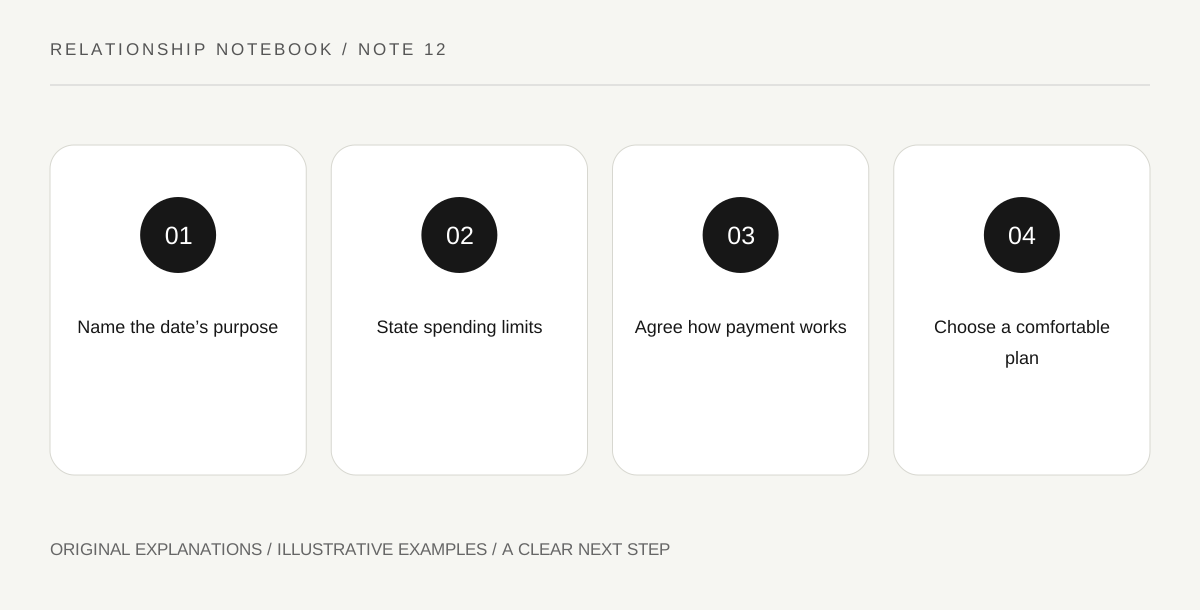
Everyday connection3 min read
Different incomes and spending preferences can make a pleasant plan uncomfortable when payment is left to assumption. Discuss the type of outing and how costs will be handled before committing. The aim is a freely workable plan, not a judgment about generosity, gender or someone’s financial worth.
Read the guide ↗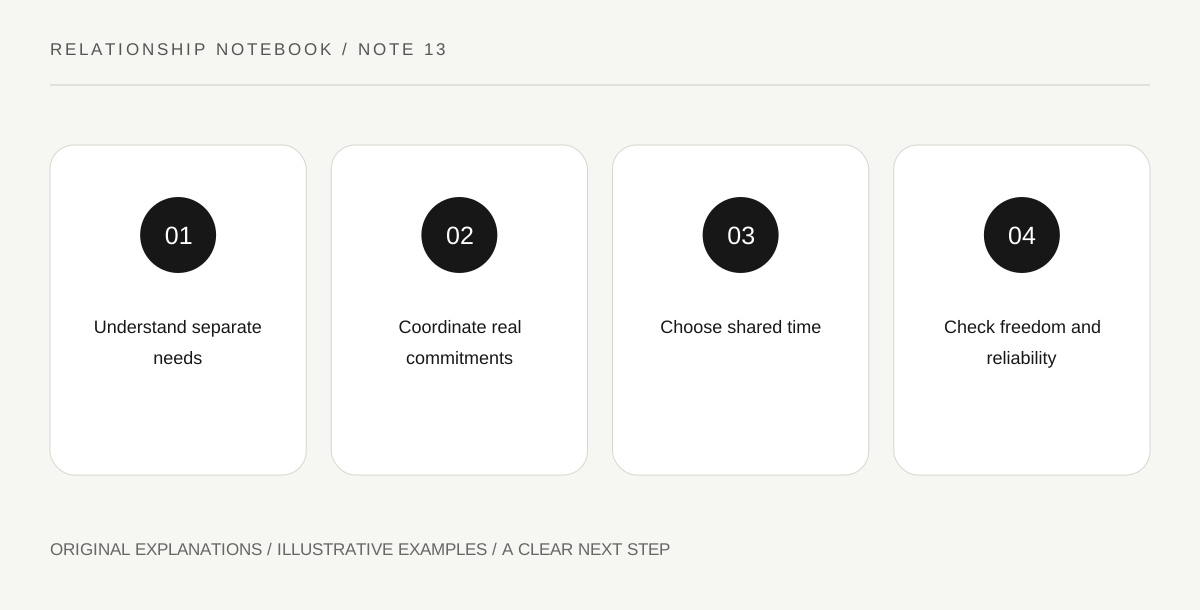
Everyday connection3 min read
A relationship can include close connection and time spent separately. Discuss how you want to stay connected without turning friends, hobbies or quiet time into evidence of rejection. A workable pattern protects each person’s independence and makes shared plans clear enough to rely on.
Read the guide ↗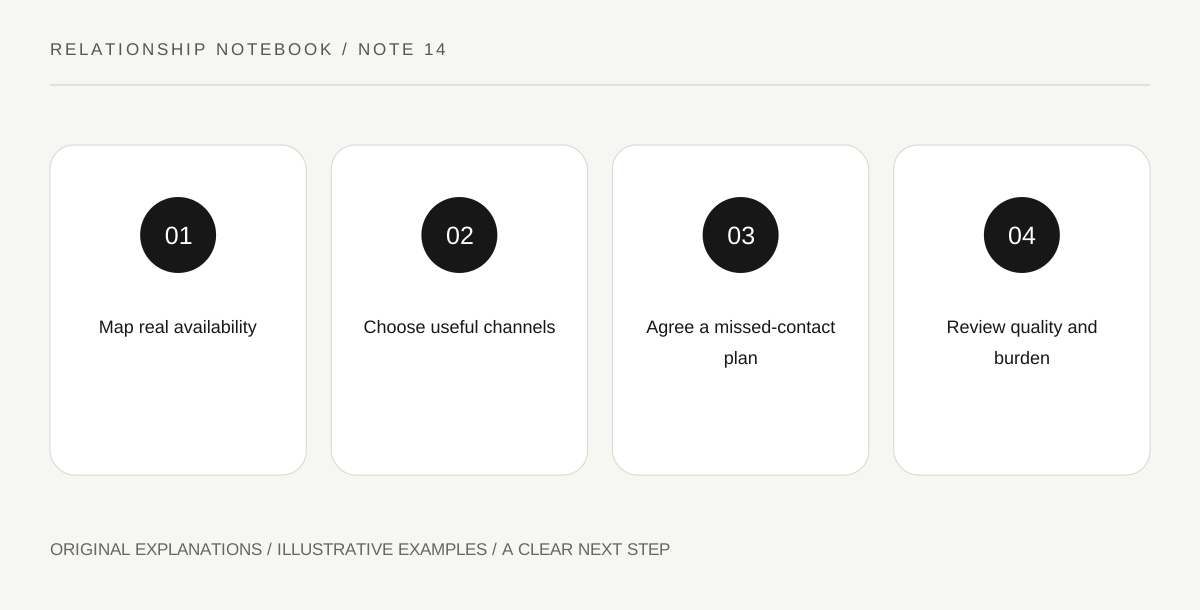
Everyday connection3 min read
Distance makes contact more deliberate, but more messages do not automatically create more connection. Agree on a rhythm that fits schedules and time zones, choose which conversations need focused attention and decide how to handle missed plans without treating constant availability as proof of commitment.
Read the guide ↗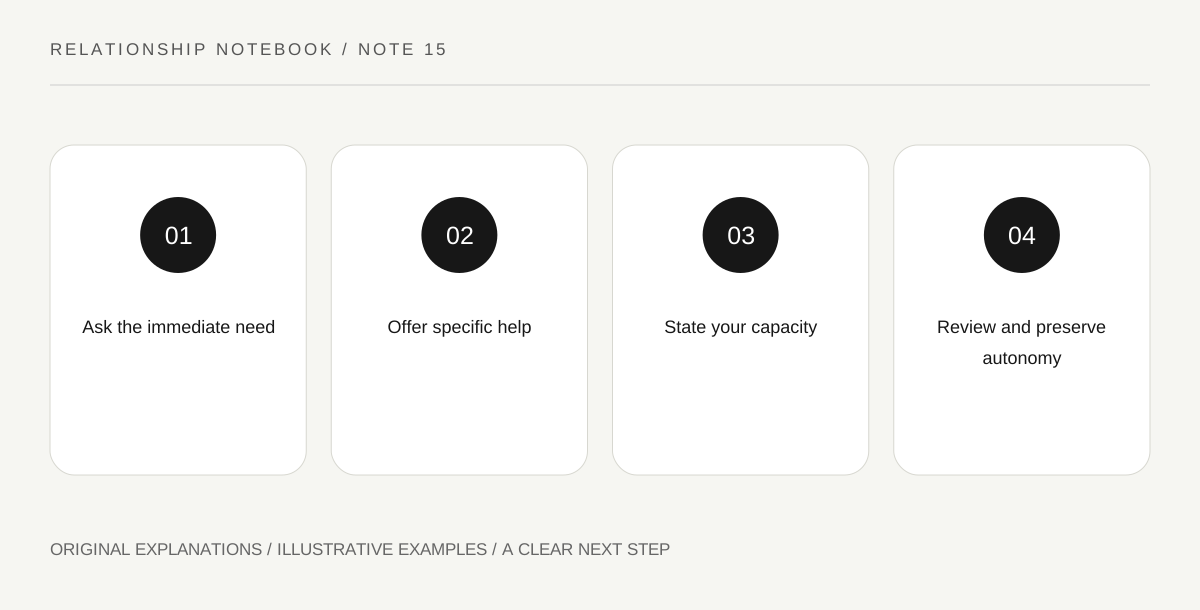
Communication3 min read
When someone you care about is under strain, the urge to fix everything can be strong. Useful support begins by asking what they want and what you can realistically offer. Keep the person’s choices intact, preserve your own limits and make room for support beyond the relationship.
Read the guide ↗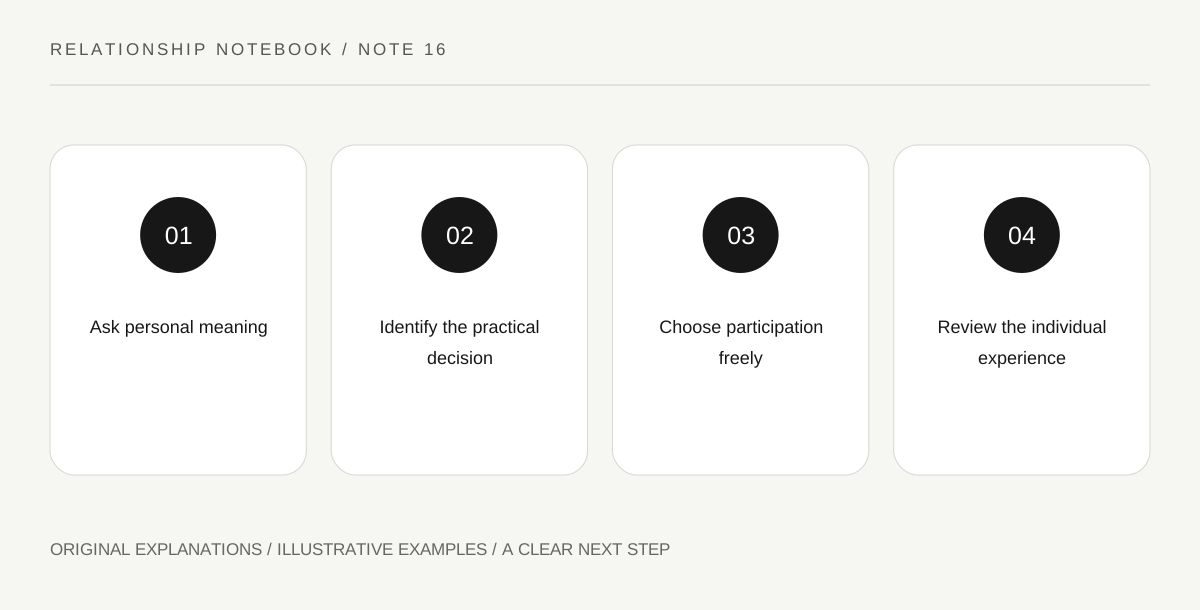
Communication3 min read
Partners may bring different family traditions, languages or expectations to a relationship. Curiosity helps when it asks about a person’s actual experience rather than assigning them a group script. Explore the meaning of a practice, decide what each person wants and keep respect separate from compulsory agreement.
Read the guide ↗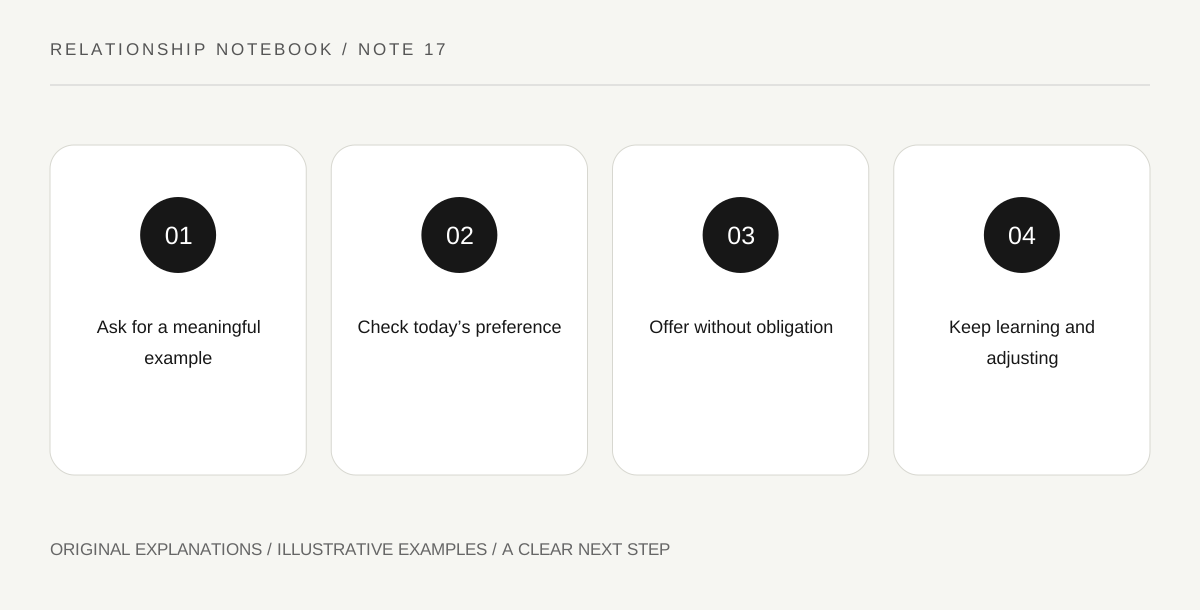
Everyday connection3 min read
People may appreciate different forms of affection in different situations. A label cannot replace asking what feels welcome today. Explore specific preferences for words, touch, practical help and shared attention while keeping affection voluntary and avoiding the idea that one person’s preferred gesture must always be accepted.
Read the guide ↗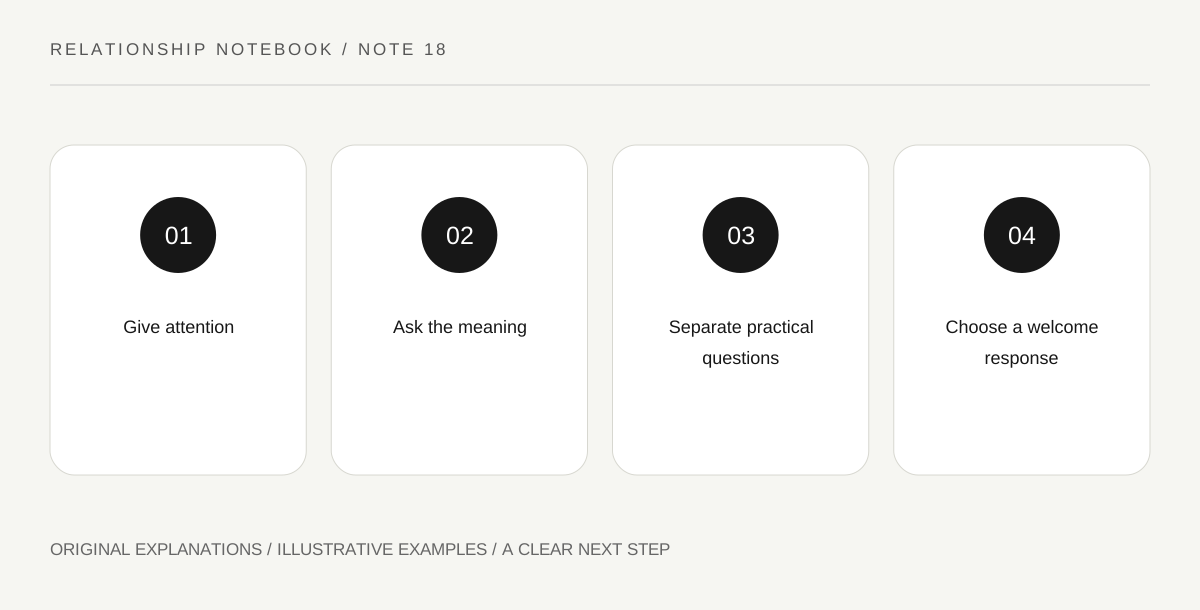
Everyday connection3 min read
Connection is built during ordinary positive moments as well as difficult ones. When a partner shares good news, make room for what it means to them before adding your own story or practical concerns. You can show interest without exaggerating, making promises or assuming they want a public celebration.
Read the guide ↗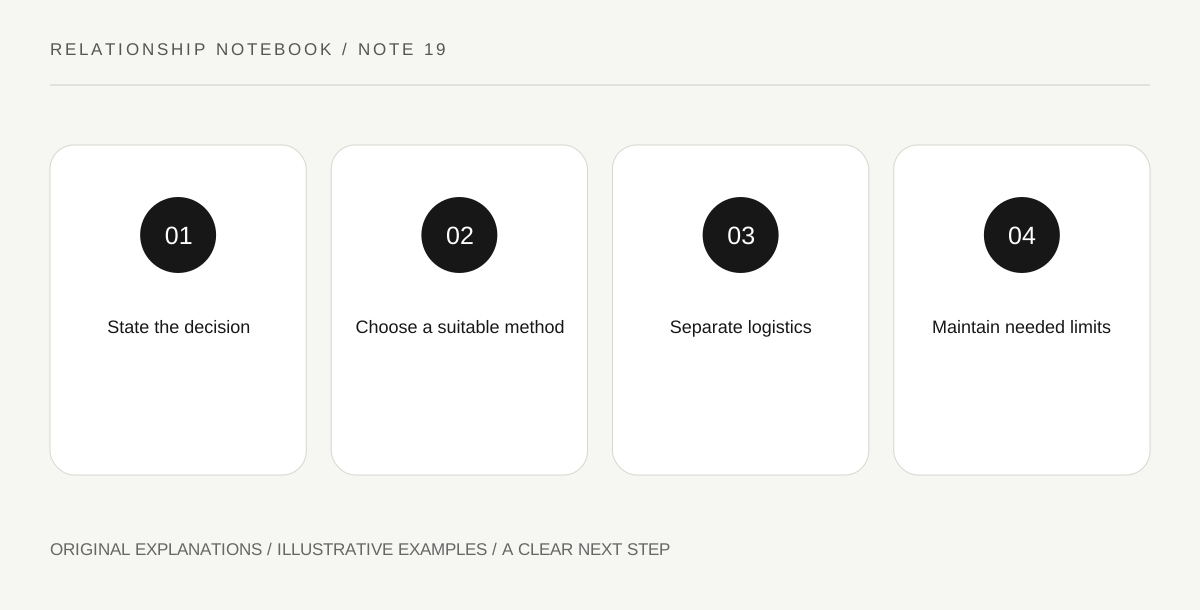
Consent and boundaries3 min read
A breakup does not require both people to agree that it is justified. You can communicate the decision clearly and avoid offering false hope to soften the moment. The method should fit your circumstances and safety, with practical arrangements handled separately from pressure to reconsider.
Read the guide ↗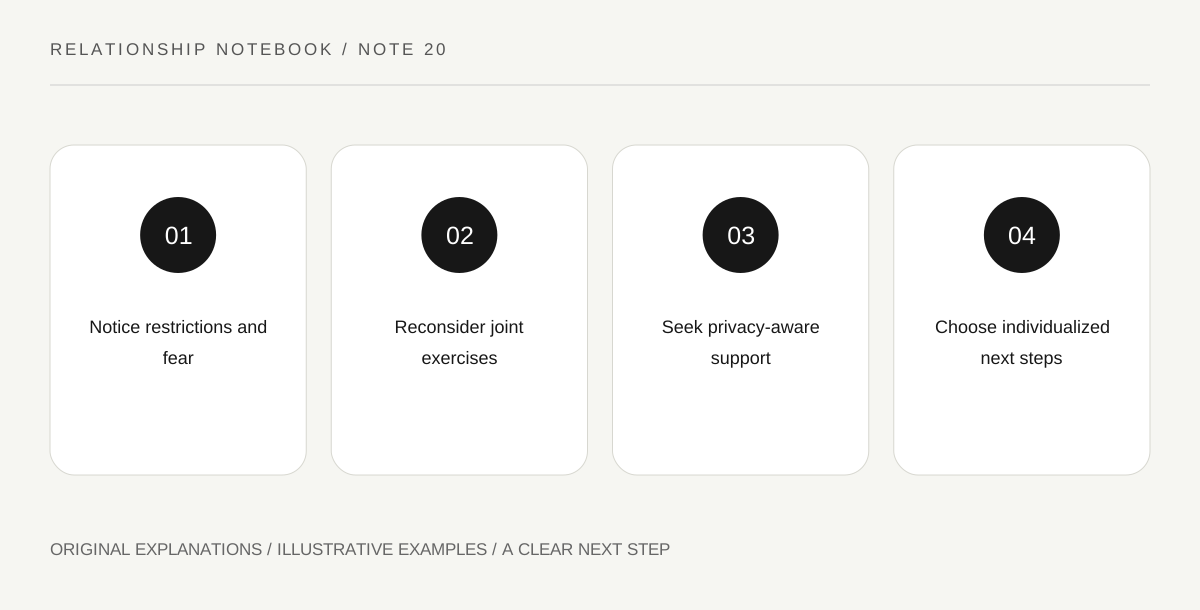
Consent and boundaries3 min read
Ordinary communication exercises assume that both adults can disagree freely. Threats, isolation, sexual pressure or monitoring change that assumption. Look at the pattern of behavior and its effect on your choices rather than search for a perfect label or a script that will make another person stop controlling you.
Read the guide ↗